My soul doth magnify the Lord : and my spirit hath rejoiced in God my Saviour.
For he hath regarded : the lowliness of his handmaiden.
For behold, from henceforth : all generations shall call me blessed.
For he that is mighty hath magnified me : and holy is his Name.
And his mercy is on them that fear him : throughout all generations.
He hath shewed strength with his arm : he hath scattered the proud in the imagination of their hearts.
He hath put down the mighty from their seat : and hath exalted the humble and meek.
He hath filled the hungry with good things : and the rich he hath sent empty away.
He remembering his mercy hath holpen his servant Israel : as he promised to our forefathers, Abraham and his seed for ever.


Friday, May 25, 2012
Thursday, May 24, 2012
From the March issue of the magazine Oklahoma Today:
Clear Creek is a new monastery, and is still under construction. I've written about the monks before; click the image on this page to see a video from about four years ago. This is from the home page of their website:
“The Brothers of Clear Creek” portfolio by Tulsa photographer Shane Brown earns Oklahoma Today’s second Wilbur Award.
Oklahoma City, Oklahoma (March 9, 2012) – Oklahoma Today magazine was named a winner of a 2012 Wilbur Award from the Religious Communicators Council for the portfolio “The Brothers of Clear Creek” in its November/December 2011 issue. Tulsa photographer Shane Brown shot the portfolio during several visits to the Clear Creek Monastery near Hulbert, Oklahoma. Additional awardees this year include Entertainment Weekly, CBS News Sunday Morning, and the feature film The Help.
“What appealed to me about shooting at the monastery is that I was exposed to so much different cultural practice,” said Brown. “I’m an observer, and the camera is the perfect tool for that.”
One of the challenges Brown faced in photographing the Benedictine monks who live at Clear Creek, which is the only traditional men’s contemplative Benedictine monastery in the United States, was the monks’ de-emphasis on the individual. Many of Brown’s photos show the men’s hands engaged in various acts of work and worship―feeding sheep, creating icons, and stringing beads together for a rosary.
“We are honored to receive the Wilbur Award for Shane Brown’s beautiful portfolio of life at Clear Creek Monastery,” said Oklahoma Today editor Steffie Corcoran. “Shane’s photos speak eloquently to the quiet universality of faith.”
Brown holds a Master of Fine Arts in Photography from the University of Oklahoma. He has been a professional photographer for more than twelve years and also has worked as a cinematographer. In addition to Oklahoma Today, Brown’s clients include The Wall Street Journal, the New York Times, and This Land Press.
The Wilbur Award is given to secular media outlets for excellence in communicating religious ideals, issues, and themes and is awarded by the Religious Communicators Council. Past magazine recipients of the award include The Atlantic, Vanity Fair, and Playboy. This is Oklahoma Today’s second Wilbur Award; the first was in 1998. Copies of the issue and a .pdf of the article are available at oklahomatoday.com.
Oklahoma Today, the Magazine of Oklahoma since 1956, focuses on the people, places, and culture of Oklahoma. A paid circulation magazine, it has subscribers in every state and many foreign countries. It is published bimonthly by the Oklahoma Tourism & Recreation Department. For more information, visit www.oklahomatoday.com.

Our Lady of Clear Creek Abbey is a Benedictine monastery located in the diocese of Tulsa, Oklahoma. It was founded in 1999 by Notre-Dame de Fontgombault, a French Abbey which belongs to the Solesmes Congregation, as does Clear Creek. The Patron Saint of Clear Creek Abbey is the Blessed Virgin Mary under the mystery of her Annunciation. See origins for a complete history.
Like the other monasteries of the Solesmes Congregation, Clear Creek Abbey belongs to those institutes of religious life entirely dedicated to contemplative prayer, without apostolic works. A particular emphasis is placed on the solemn celebration of the liturgy.It is part of the Solesmes tradition to cultivate a solemn, public liturgical Office. The monks of Clear Creek Abbey celebrate God's glory in Latin, so appropriate to give an idea of God's majesty, a sense of the sacred. Thus the monks exploit the riches developed over centuries in the Church's liturgy and cultivate Gregorian chant.


Clear Creek, which attained Abbey status in 2010, is also offering a chant weekend this fall. You can listen to some chant samples linked from this page, where some of the monks' recordings are available for purchase.
Here's an mp3 of the Christmas Responsory Quem Vidistis; here's the sequence hymn Ave Maria.
Wednesday, May 16, 2012
Ascendit Deus ("God has gone up") is the text for both the first Alleluia and the Offertory for Ascension Day.
Here's the Alleluia, sung by St. Stephen's House, Oxford:
Here's the chant score:

And here's the Offertory, sung by the Schola Cantorum Of Amsterdam Students:
Here's the chant score:

The text for both propers comes from Psalm 47; here's the JoguesChant translation (and here's an mp3 of the Offertory from their site):
The Feast of the Ascension is forty days after Easter; it commemorates Christ's ascension to heaven post-Resurrection. The story is hinted at in Luke 24:31 and told fully in Acts 1:1-11; it's mentioned in Mark 16:19, too (although it's one of the disputed verses (9-20) in Mark 16). New Advent says of the Feast of the Ascension that:
Further:
Several composers have set this text to music, including Jacobus Gallus (sung here by The Summer Singers of Minneapolis, Minnesota):
Here, The Brethren sing Jackson Berkey's setting:
And who could resist the Giuseppe Giordani version?:
Gerald Finzi's (epic!) English setting, "God is gone up," is perhaps the best known of all; it starts at about 3:20 on the video below (brought to you by the Choir of St John's College). But first, you get Stanford's Justorum Animae (from Three Latin Motets), as a bonus!
Here's the Alleluia, sung by St. Stephen's House, Oxford:
Here's the chant score:

And here's the Offertory, sung by the Schola Cantorum Of Amsterdam Students:
Here's the chant score:

The text for both propers comes from Psalm 47; here's the JoguesChant translation (and here's an mp3 of the Offertory from their site):
God has gone up amidst shouts of joy, the Lord to the sound of the trumpet, alleluia
The Feast of the Ascension is forty days after Easter; it commemorates Christ's ascension to heaven post-Resurrection. The story is hinted at in Luke 24:31 and told fully in Acts 1:1-11; it's mentioned in Mark 16:19, too (although it's one of the disputed verses (9-20) in Mark 16). New Advent says of the Feast of the Ascension that:
The observance of this feast is of great antiquity. Although no documentary evidence of it exists prior to the beginning of the fifth century, St. Augustine says that it is of Apostolic origin, and he speaks of it in a way that shows it was the universal observance of the Church long before his time. Frequent mention of it is made in the writings of St. John Chrysostom, St. Gregory of Nyssa, and in the Constitution of the Apostles. The Pilgrimage of Sylvia (Peregrinatio Etheriae) speaks of the vigil of this feast and of the feast itself, as they were kept in the church built over the grotto in Bethlehem in which Christ was born (Duchesne, Christian Worship, 491-515). It may be that prior to the fifth century the fact narrated in the Gospels was commemorated in conjunction with the feast of Easter or Pentecost. Some believe that the much-disputed forty-third decree of the Council of Elvira (c. 300) condemning the practice of observing a feast on the fortieth day after Easter and neglecting to keep Pentecost on the fiftieth day, implies that the proper usage of the time was to commemorate the Ascension along with Pentecost. Representations of the mystery are found in diptychs and frescoes dating as early as the fifth century.
Further:
Certain customs were connected with the liturgy of this feast, such as the blessing of beans and grapes after the Commemoration of the Dead in the Canon of the Mass, the blessing of first fruits, afterwards done on Rogation Days, the blessing of a candle, the wearing of mitres by deacon and subdeacon, the extinction of the paschal candle, and triumphal processions with torches and banners outside the churches to commemorate the entry of Christ into heaven. Rock records the English custom of carrying at the head of the procession the banner bearing the device of the lion and at the foot the banner of the dragon, to symbolize the triumph of Christ in His ascension over the evil one. In some churches the scene of the Ascension was vividly reproduced by elevating the figure of Christ above the altar through an opening in the roof of the church. In others, whilst the figure of Christ was made to ascend, that of the devil was made to descend.
In the liturgies generally the day is meant to celebrate the completion of the work of our salvation, the pledge of our glorification with Christ, and His entry into heaven with our human nature glorified.
Several composers have set this text to music, including Jacobus Gallus (sung here by The Summer Singers of Minneapolis, Minnesota):
Here, The Brethren sing Jackson Berkey's setting:
And who could resist the Giuseppe Giordani version?:
Gerald Finzi's (epic!) English setting, "God is gone up," is perhaps the best known of all; it starts at about 3:20 on the video below (brought to you by the Choir of St John's College). But first, you get Stanford's Justorum Animae (from Three Latin Motets), as a bonus!
Saturday, May 12, 2012
Pascha Nostrum ("Our Passover") is the Alleluia for Easter Day. Here's a beautiful version chanted by the Benedictine monks of the Abbey of Notre-Dame de Fontgombault (France):
Pascha Nostrum is also the Communion Hymn for Easter Day. Here it is sung by the Gloriæ Dei Cantores Schola:
The text for both comes from 1 Corinthians 5, v. 7-8:
Here's William Byrd's polyphonic version of the Communio text:
Here's another version of the shorter Alleluia text, by Léonin (1150 - 1201?); this was recorded by the Early Music Consort of London in 1975 (it says).
Don't quite know what this "Medieval Chant of the Cathedral of Benevento" (sung by Ensemble Organum) is. Beautiful, though!
Pascha Nostrum is also the Communion Hymn for Easter Day. Here it is sung by the Gloriæ Dei Cantores Schola:
The text for both comes from 1 Corinthians 5, v. 7-8:
7 Cleanse out the old leaven that you may be a new lump, as you really are unleavened. For Christ, our Passover lamb, has been sacrificed. 8 Let us therefore celebrate the festival, not with the old leaven, the leaven of malice and evil, but with the unleavened bread of sincerity and truth.
Here's William Byrd's polyphonic version of the Communio text:
Here's another version of the shorter Alleluia text, by Léonin (1150 - 1201?); this was recorded by the Early Music Consort of London in 1975 (it says).
Don't quite know what this "Medieval Chant of the Cathedral of Benevento" (sung by Ensemble Organum) is. Beautiful, though!
Friday, May 11, 2012
From Faith and Theology: "Psalms for all seasons: a contemporary psalter" (my bolding below, because I love the discussion of the Psalms and "emotional range"):
(This isn't an anti-Hillsong post, BTW; I don't even know what Hillsong is. It's a pro-Psalms post....)
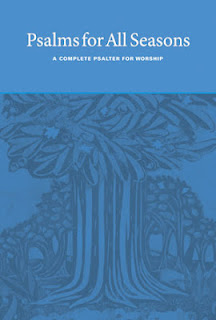
At the opening worship service of the Romans conference, it was a joy to use the wonderful new psalter, Psalms for All Seasons: A Complete Psalter for Worship (Brazos Press 2012). It has multiple versions of each of the 150 psalms (sometimes as many as ten versions of a single psalm), with musical styles ranging from chant and classical hymnody to African American spirituals and contemporary urban music. There are also spoken word and responsorial settings for each psalm. In our service, there was a psalm reading with part of a Wesleyan hymn for the response – it was very well done, and I've been singing it in my head all week. The book also includes brief theological-practical notes on how each psalm can be used in Christian worship.
I sometimes worry that our hymnbooks – where you have a more or less arbitrary selection of songs, arranged by various doctrinal and liturgical themes – create the impression that worship is a matter of human choice. You choose your Sunday hymns as you might choose a dessert from the menu at a restaurant; and you choose them on the basis of thematic relevance (this week, let's sing about love; this week, let's sing about forgiveness), so that entire dimensions of human experience might never once enter into the singing of a congregation.
But with psalmody as an overarching structure, the congregation is invited to share in experiences that might seem quite remote from their own everyday concerns. That is why we find some of the psalms so offensive: we simply cannot conceive of such experiences, even though they are – manifestly – genuine human possibilities. Instead of criticising such psalms, we need to learn how to sing them.
Our own private griefs are, often enough, quite paltry: but we are invited to join in the gigantic earth-shaking laments of the psalms. Our own criteria for happiness are selfish and small: but we are allowed to share in the magnificent heaven-rending joys of the psalmist. Our own love for God is so feeble that we might even forget all about God for days at a time: but our hearts are torn wide open as we join our voices to the enormous lovesick longing of the psalmist's praise. We are safe, affluent, protected, untroubled by enemies or oppression: but we learn to join our voices to the psalmist's indignant cries for the catastrophic appearance of justice on the earth.
If your congregation sings only Hillsong choruses, then their emotional repertoire will be limited to about two different feelings (God-you-make-me-happy, and God-I'm-infatuated-with-you) – considerably less even than the emotional range of a normal adult person. It is why entire congregations sometimes seem strangely adolescent, or even infantile: they lack a proper emotional range, as well as a suitable adult vocabulary. But in the psalter one finds the entire range of human emotion and experience – a range that is vastly wider than the emotional capacity of any single human life.
Just to stick with Hillsong as an example: for a congregation to go from singing Hillsong to singing the psalter would be like seeing Shakespeare's plays after you've only ever watched sitcoms – it would be a shock to discover that human beings can be so large, and that they come in so many different varieties. Nobody has ever felt the way Hamlet feels, or felt so much: that's exactly what makes Hamlet important.
To enter into the singing of the psalms is to participate in a pattern of worship that transcends any private experience. As though worship were really worship, not just the expression of private thoughts and feelings. As though the voice that really sings in the psalms were a universal voice, the voice of fallen and redeemed humanity gathered together in one lump – which is to say, Christ's voice.
When the church's singing is structured around Israel's psalms, there is a constant reminder that worship is not primarily a matter of personal choice; that the experience of worship is not primarily my own private experience; that the voice in worship is not even primarily my voice, but the voice of Israel, the voice of Christ, the voice of Christ's people gathered across time and space, learning together how to transmute all the varied raw materials of human experience into the praise of God through the alchemy of Jesus Christ.
(This isn't an anti-Hillsong post, BTW; I don't even know what Hillsong is. It's a pro-Psalms post....)
Monday, May 7, 2012
Et ecce terræmótus - "And behold there was a great earthquake" - is the second Psalm antiphon at Lauds on Easter Day. You can look this up at Divinum Officium ; just enter (for instance) 3-31-2013 for Easter's date, and then click "Laudes." (The Psalm number is according to the Vulgate; this is Psalm 100 for Anglicans):
Ant. Et ecce terræmótus * factus est magnus : Angelus enim Dómini descéndit de cælo, allelúja. | Ant. And behold there was a great earthquake, * for the Angel of the Lord descended from heaven, allelúja. |
Psalmus 99. Jubilate Jubiláte Deo, omnis terra: * servíte Dómino in lætítia. 2 Introíte in conspéctu ejus, * in exsultatióne. 3 Scitóte quóniam Dóminus ipse est Deus: * ipse fecit nos, et non ipsi nos. 4 Pópulus ejus, et oves páscuæ ejus: * introíte portas ejus in confessióne, átria ejus in hymnis: confitémini illi. 5 Laudáte nomen ejus: quóniam suávis est Dóminus, in ætérnum misericórdia ejus, * et usque in generatiónem et generatiónem véritas ejus. | Psalm 99. Jubilate O be joyful in the Lord, all ye lands: * serve the Lord with gladness, 2 And come before his presence * with a song.. 3 Be ye sure that the Lord he is God; * it is he that hath made us, and not we ourselves. 4 We are his people, and the sheep of his pasture : * O go your way into his gates with thanksgiving, and into his courts with praise; be ye thankful unto him. 5 Give praises unto his Name: for the Lord is gracious, his mercy is everlasting; * and his truth endureth from generation to generation. |
Ant. Et ecce terræmótus factus est magnus : Angelus enim Dómini descéndit de cælo, allelúja. | Ant. And behold there was a great earthquake, for the Angel of the Lord descended from heaven, allelúja. |
The text for the antiphon comes from Matthew 28:2:
1 Now after the Sabbath, toward the dawn of the first day of the week, Mary Magdalene and the other Mary went to see the tomb. 2 And behold, there was a great earthquake, for an angel of the Lord descended from heaven and came and rolled back the stone and sat on it. 3 His appearance was like lightning, and his clothing white as snow. 4 And for fear of him the guards trembled and became like dead men.
5 But the angel said to the women, “Do not be afraid, for I know that you seek Jesus who was crucified. 6 He is not here, for he has risen, as he said. Come, see the place where he lay. 7 Then go quickly and tell his disciples that he has risen from the dead, and behold, he is going before you to Galilee; there you will see him. See, I have told you.”
8 So they departed quickly from the tomb with fear and great joy, and ran to tell his disciples. 9 And behold, Jesus met them and said, “Greetings!” And they came up and took hold of his feet and worshiped him. 10 Then Jesus said to them, “Do not be afraid; go and tell my brothers to go to Galilee, and there they will see me.”
There is, again, no chant score or recording of this antiphon online (I'll wait for Jakub to come by for that! - or maybe I can find it in some manuscript someplace and transcribe it myself)....
(EDIT: Thanks, Jakub!

)
....but there's a rather famous mass of the same name, by the 14th/15th Century French composer Antoine Brumel. Missa Et ecce terræmótus - "The Earthquake Mass," that is - is an amazing piece in 12 voices, here sung by the Huelgas Ensemble.
Here's something from Gimell records about Brumel and this mass:
It is hard to think of any other piece of music quite like the 12-part 'Earthquake' Mass by Antoine Brumel (c.1460-c.1520). Both in its employment of twelve voices for almost its entire length and in its musical effects, there is nothing comparable to it in the renaissance period, even if some of those effects may remind the listener of the 40-part motet Spem in alium (1) by Thomas Tallis (c.1505-1585). Brumel's masterpiece did not inaugurate a fashion for massive compositions; but it did quickly establish a formidable reputation for itself, admired throughout central Europe in the 16th century as an experiment which could not easily be repeated. It is tribute enough that the only surviving source was copied in Munich under the direct supervision of the late renaissance composer Orlandus Lassus (1532-1594), who nonetheless never tried to rival its idiom in his own work.
A pupil of Josquin des Prés (c.1440-1521) and one of the leading Franco-Flemish composers around 1500, Brumel was famous throughout the 16th century. In a period which has left a large number of laments in memory of its great composers, Brumel received an exceptional number, more than Obrecht (c.1450-1505), Mouton (c.1459-1522) and Agricola (?1446-1506) put together. Thomas Morley (in A Plain and Easy Introduction to Practical Music, 1597) was probably the last writer to praise Brumel for his skill, the only master he ranked alongside Josquin, making particular reference to his ability in the art of canonic composition. Brumel is important to modern commentators because he was one of the few leading members of the Franco-Flemish school to be genuinely French, which is to say that he was born outside the boundaries of the Burgundian Empire, somewhere near Chartres. He was initially employed in France proper at the Cathedrals of Chartres and Laon and (in 1498) at Notre Dame in Paris where he was responsible for the education of the choirboys. However he seems to have had a restless temperament, which led to his dismissal on at least two occasions, and he soon began the peripatetic life of so many musicians of the renaissance period. There is evidence that he was employed in Geneva, Chambéry and probably Rome; but the high-point of his career was the fifteen years he spent as successor to Josquin and Obrecht at the court of Ferrara (between 1505 and 1520) in the retinue of Alfonso d'Este I.
Brumel's reputation as a writer of canons would not have been greatly increased by the simple example which underlies the Missa Et ecce terrae motus, for all that the presence of the canon plays an important role in understanding the unusual musical style of the whole. Brumel restricted his quotation of the Easter plainsong antiphon at Lauds, Et ecce terrae motus, to its first seven notes (which set the seven syllables of its title to D-D-B-D-E-D-D), working them in three-part canon between the third bass and the first two tenor parts during some of the Mass's 12-part passages. These statements occur in very long notes compared with the surrounding activity and their details may vary slightly from quotation to quotation (for example, which of the three voices begins and what the interval between them may be). By and large, though, the realisation of this canonic scaffolding is not rigorous and many of the sections of the mass are free of canon altogether.
However the influence of these slow-moving notes can be heard throughout the work, whether they are actually there or not, in the solid, slow-changing underlying chords. A casual listener to the Missa Et ecce terrae motus, confused at first by the teeming detail of the rhythmic patterns, may hear only some rather disappointing harmonies. Closer listening will reveal why Brumel chose to write in so many parts: he needed them to decorate his colossal harmonic pillars. In doing so he effectively abandoned polyphony in the sense of independent yet interrelated melodic lines, and resorted to sequences and figurations which were atypical of his time. The effect can even be akin to that of Islamic art: static, non-representational, tirelessly inventive in its use of abstract designs, which are intensified by their repetitive application. This style of writing is so effective that anyone who might be reminded of Tallis's Spem in alium would be unable to conceive of the need for another 28 parts.
The manuscript source for Brumel's 'Earthquake' Mass (Munich Bayerische Staatsbibliothek Mus. MS1) was copied for a performance in about 1570 at the Bavarian court. The names of the 33 court singers are given against the nine lower parts (the boys are not named), amongst whom Lassus sang Tenor II. Unfortunately the last folios, which contain the Agnus Dei, have rotted, leaving holes in the voice-parts. Any editor of the piece is presented with the unusual task of trying to guess where the notes which he can read might fit, as they are placed on the page in individual parts rather than in score; then re-compose what is missing. This was done for Gimell by Francis Knights. A further Agnus Dei, on the Et ecce terrae motus chant and attributed to Brumel, survives in Copenhagen; but it is widely thought not to belong to the 12-part Mass, since it is for six voices, which use different vocal ranges from those in the 12-part setting. In addition its musical style differs in various important respects from that of the larger work, not least in quoting many more than the first seven notes of the chant. For these reasons it has been omitted from this recording. The Mass is scored for three sopranos, one true alto, five wide-ranging tenors and three basses. The tessitura of all these parts (except perhaps that of the sopranos) is unpredictable to the point of eccentricity. Countertenor II, for example, has a range of two octaves and a tone, the widest vocal range I have ever met in renaissance music.
Wednesday, May 2, 2012
See the scrolling text in the video for more.
Here's Alamire's website, on which they offer a page of video samples.
HT Sed Angli; they've just posted a couple of Alamire's videos. Here's part of John Taverner's beautiful Dum transisset sabbatum:
I hadn't known of this U.K. group till now; they're great!
Here's Alamire's website, on which they offer a page of video samples.
HT Sed Angli; they've just posted a couple of Alamire's videos. Here's part of John Taverner's beautiful Dum transisset sabbatum:
Dum transisset Sabbatum Maria Magdalene et Maria Jacobi et Salome emerunt aromata, ut venientes ungerent Jesum, alleluia. Et valde mane una sabbatorum veniunt ad monumentum orto jam sole. Gloria Patri...
And when the Sabbath was past, Mary Magdalene and Mary [the mother of] James, and Salome brought spices, that coming they might anoint Jesus, alleluya. And very early the first of the Sabbath, they came to the monument, the sun being now risen. Glory be to the Father...
I hadn't known of this U.K. group till now; they're great!
Subscribe to:
Posts (Atom)


